Search

Poland Surface Waters: Navigating the Ecological Challenges

The ecological state of surface waters in Poland, as reported by the Main Inspectorate of Environmental Protection in 2022, does not inspire optimism. Over 94% of waters (examined as “individual parts of surface waters”) failed to achieve the good ecological status required by the Water Framework Directive. When it comes to chemical status, a mere 12% showed a “good state”. It’s crucial to note that in such studies, exceeding the concentration of even one required indicator determines the classification. Nonetheless, the data presented paints a grim picture of water quality in Poland. This is especially significant in the era of advancing climate change.

The report in question reveals a rise in the average temperature in our country by as much as 1.5°C when comparing 30-year periods, namely 1951-1980 vs. 1991-2020. It’s worth mentioning that the average temperature in 2022 was 1°C higher than the last 30-year period mentioned. Such a significant increase in average temperatures should sound alarm bells, as the frequency of extreme events will only escalate with ongoing climate change. Our commitment to adaptive and mitigative actions against climate change can be implemented across various sectors, with a particular emphasis on energy. However, in this article, I’d like to focus on rivers, which serve as the “cardiovascular network of a living ecosystem” that is our natural environment.

A River is Not a Highway

In cases of prolonged heatwaves, which result in both reduced flow and increased water temperature, the biological life of rivers becomes extremely endangered. Last year’s disaster on the Oder River serves as a case in point: according to government institutions, pollutant discharges were in compliance with issued water-legal permits, yet the catastrophe still occurred. So, what can be done to counter such threats? The government and its subordinate state administrative units are attempting to save rivers through LEGISLATION.

To this end, the so-called “Specustawa Odrzańska” (Oder Special Act) has been submitted to the parliament. It’s a unique occurrence in Europe for lawmakers to dictate what should be built, modernized, and renaturalized at specific kilometers along the river, instead of establishing universal principles for the protection of the Oder. While there are positive provisions, such as increased river monitoring, higher fines for illegal sewage discharges, sealing off illegal discharges, and promoting dispersed retention, they are woefully insufficient. Many crucial aspects of biodiversity protection are overlooked, with the focus mainly on hydraulic structures.

Reading the act, one gets the impression that the primary objective, under the guise of river protection, is to enhance its transport capabilities. Many proposed investments diminish the Oder’s resilience to climate change and localized pollutant discharges—especially saline waters—leading to the death of the river as a natural entity. A significant “sin” of the mentioned act is the manner of its preparation, specifically the near absence of dialogue with the public, including non-governmental organizations. After all, a river is not a water highway generating transport profits but a biologically vibrant environment that constitutes a societies collective good.

You pollute – you pay

Contrary to the newly drafted Water Directive (RDW), the special act still allows for permissible amounts of discharges for stormwater overflows. It doesn’t matter whether we discharge 100 times at 1 m³ of sewage—which won’t negatively impact the river’s self-cleaning abilities—or a one-time 1000 m³. It’s the latter that could jeopardize the river’s biological life. The draft legislation contains many troubling provisions, including those related to specific hydraulic investments. There’s a lack of assessment on the impact of these investments on the receiving body of water. There’s also no attempt to study the river’s resilience to sudden discharges and loads of sewage—this raises my strong objection. I wonder if the authors of the act don’t see the difference between sipping one glass of liquor daily for a specific period and downing several liters in one day? The impact of a large amount of alcohol won’t be beneficial for our bodies, phrasing it lightly. Perhaps this is too stark of a comparison, but like alcohol for the body, sewage for surface waters, when administered in large quantities in a short time, can lead to irreversible consequences.

If, after the Oder disaster, the institutions responsible for the cleanliness of our waters want to bring them to a good ecological state, I suggest starting a broad public debate. A substantive debate will allow for the exchange of knowledge and the preparation of solutions that take into account the needs of society, living nature, and the inland economy. An extremely important aspect of actions for the cleanliness of our waters is respecting the principle: the polluter pays, and the one who manages water and sewage benefits. Unfortunately, I only find the first part of this principle in the described draft legislation. Implementing the whole requires respecting the following values: responsibility, knowledge, passion, and perseverance.

Values to guide us

The first of these values — responsibility — is unfortunately often passed around like a hot potato between various administrative units. Let me give you an example of the wall-like obstacles experienced by employees of a company participating in the “Clean River” project on the Motława River. They approached the local municipality through which the final stretch of the river flows, and the municipality, in turn, contacted Polish Waters to secure a container for collected trash. Regrettably, neither the municipality nor Polish Waters supported the initiative, citing either a lack of competence or the need to adhere to financial discipline. Hopefully, after the next elections, there will be fewer such officials or local leaders. It’s the decisions of such individuals and their failure to take appropriate actions that result in the water transparency in the Motława River, located just a few kilometers away in the historic center of Gdańsk, not exceeding 30 cm. For comparison, the average transparency of Baltic Sea waters is around 500 cm. The trash collected during the campaign—mostly discarded by tourists and local residents—was disposed of at the company’s expense. SCANDAL or “business as usual”? Or perhaps the officials are guided by the idea of not touching certain matters. Why should the water in the Motława be clean? What if it turns out that the sediments contain a whole “Periodic Table” of pollutants? By flowing through rivers, most illegal outlets and unregulated runoff from fields can be detected. In the case of our main rivers, the Vistula and the Oder, the primary sources of pollution are saline water discharges from mining areas, diffuse pollution from agricultural lands, and inadequately treated industrial or municipal sewage. All these pollutants eventually end up in the Baltic Sea, which, as we know, is also an endangered body of water. Due to the lack of continuous water exchange with the North Sea and low salinity, the Baltic has limited self-cleaning capabilities. This is evidenced by frequent cyanobacterial blooms (at the time of writing this article, most of the Tri-City beaches were closed) and the recent burst of the Nord Stream 1 pipeline, which contaminated significant amounts of water with pollutants deposited in the seabed. Despite this, mainly due to rational sewage management in coastal areas, the cleanliness of the Baltic waters is gradually improving. This shows how important responsible water management is in the catchment areas of rivers that feed our sea, and for such good stewards, big applause is due.

The second value — knowledge — determines the scope and possibilities for implementing best practices in water management. The level of expertise in wastewater treatment technology, retention and management of rainwater, sediment management, and intelligent watershed management is continually increasing. Numerous opportunities exist for knowledge exchange in the water environment: specialized conferences, seminars, and webinars are organized both domestically and internationally. Higher education institutions are initiating courses in water engineering and even studies in climate change mitigation and adaptation. One such initiative is the Inter-University Climate Academy (MAK), where students gain knowledge from the best experts and practitioners. I deeply hope that education at all levels will play a significant role in mitigating the climate crisis and restoring clean water in Polish rivers. Leveraging access to the best knowledge, a Gdańsk-based company has developed a concept for an intelligent stormwater overflow chamber. The primary goal of the project is watershed management, which involves managing the flow of rainwater and sewage within designated catchment areas. The project includes the development of a hydrodynamic model with a water demand analysis, spatial planning of the catchment, precipitation sizes and intensities, and determining the load and quantity of sewage and their impact on the receiving body, such as a river or lake. The program promotes large-scale, dispersed retention and cleaning technologies based on natural methods (NBS).

Values like passion and perseverance belong to the social domain. Non-governmental organizations, foundations, businesses, and ultimately, the civic society, hold the authorities accountable to ensure that when creating laws and fighting for clean water, the voice of the community is heard. Perhaps it’s worth reaching for broader technical, environmental, and legal arguments to meet the European Union’s requirements for clean rivers? With the common good in mind, I believe that substantive discussions involving all stakeholders will yield positive results.

Legal Entity Status for the Vistula River

Is solving the problem of river pollution simple? Trendy terms exist, like SUSTAINABLE DEVELOPMENT and DATA MANAGEMENT. To manage something [in this case, bodies of water – water management ], you need reliable data. This data should be publicly available and continuously updated. I advocate for the centralized collection of data on the quantities and loads of discharged sewage. An essential aspect of such a database should be its accessibility to every citizen. There are already cities in the world where anyone can see when and how much was discharged into the river, what load of pollutants was released, and what impact it had on its biological balance. These cities include Yorkshire [United Kingdom], Hamilton [Canada], and Washington [USA].

Beyond data transparency, some countries are introducing legal entity status for rivers, especially those important to a particular region. A river with a legal persona can more effectively defend itself against excessive exploitation or predatory management. Anyone who contaminates it must face the consequences. In Canada, granting legal entity status to the Magpie River has preserved its wild character and protected the heritage of the indigenous tribe inhabiting its watershed. Other rivers with legal entity status include the Whanganui in New Zealand and the Klamath in the United States. Ecological institutions have also taken steps to grant legal entity status to the Colorado River.

Perhaps our Vistula deserves this as well? After all, it is one of the wildest and largest rivers in Europe. Or maybe, to protect its rights, we should establish an Ombudsman for our largest and most polluted rivers, such as the Vistula and Oder? We will ask these questions during this year’s Stormwater Poland conference in Katowice on September 28. I am curious about the public opinion on this matter. We will invite the best specialists from Poland and abroad to the discussion. These will include engineers, hydro technicians, and ecologists. Perhaps a substantive debate will bring us closer to providing special protection for our water heritage?

Doesn’t the ‘wild’ and clean Vistula — our national treasure — deserve special protection? It may turn out that, for the broadly understood common good, the Vistula will better fulfill its role by supporting the inland economy. We will soon know opinions on these interesting issues. To better prepare for the September debate, I invite you to an open discussion on our blog today: www.biznesdlaklimatu.pl.

Wojciech Falkowski
Protecting residents from sanitary hazards – HST solutions for combined sewers

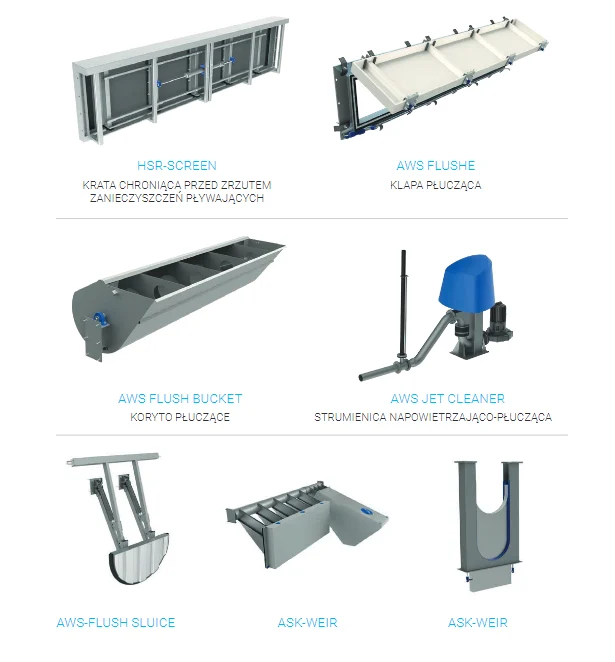
The combined sewerage system discharges domestic sewage and rainwater through a common channel. Therefore, in the event of overflows, e.g. during heavy rains, there is a serious risk of exceeding the capacity of the treatment plant and discharging untreated wastewater to the receiving water body. Sludge removal systems and HST flow control devices can provide a solution to such problems.

  • Sanitation risks posed by wastewater decay
  • Technology to prevent wastewater decay
  • HST equipment and comprehensive support from Ecol-Unicon
  • AWS Jet Cleaner aeration and flushing nozzle
  • AWS Flush Gate

Sanitary wastewater decay is a serious sanitary risk

Sewage decay and the accompanying noxious odours are caused by oxygen deficiency in extensive sewer systems and long delivery pipelines. This occurs after the wastewater has been in the pipeline for only a few hours, and its consequences can be hazardous to the health and lives of both residents and maintenance crews. At the same time, treatment of such wastewater becomes less efficient and more energy-intensive.

Insufficient aeration of wastewater results in wastewater decay. It leads to the oxidation of hydrogen sulphide and the formation of sulphuric acid, which is harmful to the wastewater network components.

Hydrogen sulphide causes corrosion of concrete and metal structures and equipment. It also contributes to the foaming of wastewater and the growth of filamentous bacteria and aerobic chemotrophic sulphur bacteria. It is the gas that causes the most poisoning and deaths among workers associated with the operation of water and wastewater systems. It is particularly dangerous because it cannot be smelled in high concentrations.

Technologies to prevent decay of wastewater

Contrary to expectations, the investment and operating expenses of solutions aimed at preventing wastewater from decay are not high and should already be foreseen at the design stage of the sewage system. They make it possible not only to operate the wastewater treatment plant more efficiently, but also to seriously reduce operating costs.

The most common systems used are aeration of wastewater or disposal with air or water, such as:

  • pipeline blowing with compressed air
  • aeration of wastewater with compressed air
  • water flushing

Another solution used is the application of chemical agents that bind hydrogen sulphide compounds or inhibit bacterial growth. However, this method generates higher costs and increases the risk of corrosion of concrete or metals. It also requires appropriate dosing pumps and equipment to measure the concentration of hydrogen sulphide. In addition, chemical compounds such as nitrates or iron salts are not completely removed during wastewater treatment and may end up in the environment.

HST devices and comprehensive support from Ecol-Unicon

German-made solutions from HST Systemtechnik, such as sludge removal systems, keep sewer networks in optimum condition. These are innovative and effective products that integrate information technology into the operation and management of facilities.

The exclusive distributor of HST products in Poland is Ecol-Unicon, a company that, together with its German partner, provides comprehensive services from the design itself, through the implementation stage, to service.  Ecol-Unicon offers full support in planning, consultancy, assessment, dimensioning or planning documentation of the entire water and sewage system.

AWS Jet Cleaner aeration and flushing nozzle

The AWS Jet Cleaner aeration and flushing jet is a powerful and highly efficient pump with nozzle set. It can be used in combined sewers, wastewater treatment plants, storage tanks and in process water treatment.

The AWS Jet Cleaner produces a water-air mixture as a driving and cleaning jet. This effectively eliminates wastewater decay processes during prolonged retention.

It is a fully automatic cleaning unit which, in its standard version, consists of a pump unit and a set of injectors. The AWS rotary nozzle is equipped with a set of injectors, which allow a large flushing radius even with very different tank geometries. The contaminants are discharged here as the tank is emptied. During the emptying process, the nozzle operates in intermittent or continuous mode, according to predetermined switching points. In addition, cleaning is assisted by rotating movements.

The HydroMatic software used in the streamer allows for energy-efficient control of the entire process with real-time monitoring of the results. It is also possible to individually adapt the operating mode of the unit to local conditions.

Flushing efficiency data is continuously recorded by a screen located at the bottom of the tank. This makes it easy to monitor the effectiveness of ongoing activity. The location and intensity of sludge can be determined by entering the data manually into the control panel or automatically using an optical camera.

AWS Flush Gate

AWS Flush Gate is an extremely effective and fully automatic system used to remove sludge from combined sewers and holding tanks. It works by using sensors mounted in the tanks and relies on the use of stored water to flush the bottom of the tank. Opening the manhole creates a strong wave that safely flushes out accumulated sludge.

A chamber closed by a flap is placed above the section that requires flushing. This allows the chamber to be opened automatically when it is required to remove the sludge from the system. For the remaining time, water is stored in the chamber, ensuring that the sewer can be cleaned even in dry weather.

Thanks to its lightweight housing and compression system, the AWS Flush Gate does not require additional delayed closing mechanisms, minimises hydraulic losses and allows the tank to be completely emptied.

You can find more about the equipment supporting HST’s combined sewer solutions on our website. We also invite you to sign up to our newsletter to keep up to date with all the latest news from the wastewater industry.

Due to climate change, we are increasingly experiencing catastrophic phenomena such as violent storms, heavy rains or prolonged periods of drought. These are not only disruptive in cities, but also seriously affect farmers, determining the size, quality and price of crops. Agriculture is an extremely water-intensive economic sector. It is therefore not surprising that rainwater retention solutions are increasingly being sought here too, in order to conserve water resources.

  • Hydrological situation and retention potential in Poland
  • New regulations for the benefit of farmers
  • Innovative HYDROZONE solutions – the antidote to agricultural drought

Hydrological situation and retention potential in Poland

According to the UN, the limit below which a country is considered at risk of water scarcity is 1700 m3 per capita. In Poland, this value has not exceeded 1600 m3 for years, which gives it one of the last places in Europe[1]. Our resources are not only very scarce, but are additionally affected by high seasonal and area variability.

Meanwhile, still most of the precipitation, a major contributor to the water balance, ends up back in the atmosphere through evaporation. Only some of it infiltrates into surface and groundwater or is collected and reused.

There is no doubt that major investments in technology and water-saving solutions are needed. Rainwater management is not only an expression of concern for the environment and dwindling potable water supplies. It also represents tangible financial savings, which farmers are slowly beginning to realise.

It is estimated that the real retention capacity in Poland is 15% of the average annual outflow. For several decades we have not been able to exceed 6.5%. We only managed to do so two years ago. All thanks to increasing investments, subsidy programmes, but also an increase in environmental awareness[2].

Agricultural drought – a serious challenge for Poland!

The law is favourable to farmers

In addition to existing programmes and funds to support retention, legislation also seems to favour agricultural investment in this area.

Simplified regulations in force since this year allow the reconstruction of drainage systems without a water permit. It is also possible to construct retention ponds of up to 5,000 m2 in area and 3m in depth by notification only. In addition, according to Regulation 2020/741 of the European Parliament and of the Council of the European Union of 25 May 2020, it will be possible to reuse water from previously treated wastewater in agriculture.[3]

The project has been proceeding since 2018 with the aim of setting minimum quality standards for reclaimed water in EU member states. Its aim is to ensure sufficient water to irrigate fields, particularly during heat waves and severe droughts.

The new regulations are part of the circular economy. It is intended to help adapt to the consequences of climate change. The regulations will take effect from 26 June 2023. According to experts, the entry into force of the regulation could increase the use of water from wastewater from the current approximately 1 billion m3 per year to as much as 6.6 billion m3 in 2025.

Innovative HYDROZONE solutions – the antidote to agricultural drought

It turns out that simply by investing in the right tank, even more than 500 litres of rainwater can be collected during half an hour of rain. On a monthly basis, with an average rainfall of 650 mm, this yields up to 5 000 l of water!

The construction of multi-purpose retention tanks makes it possible to reuse treated wastewater for crop irrigation. This not only allows for lower consumption of limited surface and groundwater resources, but also great savings in the face of ever-increasing water prices.

HYDROZONE systems manufactured by Ecol-Unicon are a line of modern products addressing all rainwater and snowmelt retention needs. Their advantage is a modular design with additional equipment allowing to collect, but also to treat and reuse rainwater. Three variants are available: from basic retention functions to advanced water management.

HYDROZONE BASIC retention tanks with evaporation function are used to retain rainwater and snowmelt in the event of drought. They will also prove their worth in the prevention of waterlogging and flooding on farms.

The second type of tank, HYDROZONE CLEAN, additionally enables rainwater and snowmelt water to be treated before it is reused for crop irrigation. HYDROZONE BENEFIT, on the other hand, is a solution with a particularly high environmental performance. It includes features that allow the tank to be adapted to the very specific needs of each farmer.

The modular design of all HYDROZONE systems not only allows them to be easily adapted to the type of farm, but also greatly simplifies installation and day-to-day maintenance. They are equipped with a pretreatment system and, depending on your needs, can optionally include flow regulators, water refreshing jets or pumps to facilitate water extraction and watering.

Importantly, they are constructed using durable DZB reinforced concrete tanks, capable of withstanding high dynamic loads. Integral to the HYDROZONE tanks is the innovative Bumerang SMART system, which allows key data to be monitored and the operation of the facilities to be effectively controlled and managed.

[1] www.raportsdg.stat.gov.pl
[2] https://www.wody.gov.pl/attachments/article/1875/Raport%20Stop%20Suszy%20Wody%20Polskie_Od%20suszy%2050-lecia%20do%20wzrostu%20retencji.pdf
[3] https://eur-lex.europa.eu/legal-content/PL/ALL/?uri=uriserv:OJ.L_.2020.177.01.0032.01.POL&toc=OJ:L:2020:177:TOC

The VI Edition of Stormwater Poland – an event of which we are pleased to be a Partner – will start already on 28 September in Katowice. This is a well-known and respected, and at the same time the largest rainwater conference in Poland. It features discussions, but also practical demonstrations of how the world of rainwater can be adapted to the challenges of climate change and the needs of urban development. The conference will be preceded by a meeting of the water and wastewater industry – WaterFolder Day, which will showcase new applications and technologies to support the design process of water conservation solutions.

  • Stormwater Poland – It’s time for rainwater!
  • WaterFolder Day
  • Restore water to nature – designing retention tanks for the 21st century
  • Hydrophytic retention tanks – nature supported by technology

Stormwater Poland – It’s time for rainwater!

Stormwater Poland is first and foremost a practical approach to water management problems. It is based on case studies and a constant search for inspiration. At the same time, it is also an opportunity to exchange experiences from around the world.

Despite numerous uncertainties or economic and geopolitical turmoil, one thing is clear – the time of rainwater is coming! After numerous investments and modernisations of water and sewage systems, the time has come for drainage systems. Without them, it is difficult to think about maintaining the infrastructure of cities, the further expansion of communication networks and water management strategies.

The conference will last two days and will include four diverse thematic sessions. Our representative, Szymon Mielczarek PhD, also sits on the scientific committee. He is an Ecol-Unicon expert with many years of experience in the design, testing, certification and market implementation of building products for sewage systems. Dr. Mielczarek will also take part in the inaugural WaterFolder Day meeting of the conference.

WaterFolder Day

WaterFolder Day is the first event in Poland that will be attended by designers affiliated to the WaterFolder platform. Those who wish to explore professional selection tools in investment design will also be present. It is an opportunity to exchange views and experiences in the field of effective design, as well as to learn about new solutions and portfolios of the best manufacturers in the water and wastewater industry from the Poland and the world.

The programme will include lectures on projects such as WaterFolder Connect and PANDA. Water permits, drainage design, green-blue infrastructure, as well as training on selection calculators and modelling applications will also be addressed.

Restore water to nature – designing retention tanks for the 21st century

One of the workshops during WaterFolder Day will be led by Monika Kszczot, Product Engineer at Ecol-Unicon. On a daily basis, she is involved in product development and the adaptation of solutions to both the needs of the market and the evolving water and wastewater infrastructure. During the event, she will present the possibilities offered by the Water folder storage tank selection calculator. He will also discuss its most important functionalities.

Water folder is a unique platform which is the result of cooperation between leading manufacturers and experienced specialists in the water and sewage industry. It is currently used by more than 5,000 designers from all over Poland. The platform offers calculators for calculating retention volumes, infiltration and the selection of green roofs. With its help, it also becomes easier to estimate operating costs, select pumps and pumping stations, pre-treatment systems, gravity flow pipes or linear drainage systems.

Professional management of urban water and sewerage systems requires up-to-date, objective and indisputable rainfall data. This is why the platform operates on the basis of the Polish Atlas of Rainfall Intensities (PANDa), which contains up-to-date information on the intensity of the representative rainfall for 930 cities in Poland over the last 30 years. Importantly, the tool continues to be improved and enriched with new useful features to enhance its capabilities and usability for its target audience.

Hydrophytic retention tanks – nature supported by technology

On behalf of Ecol-Unicon, one more lecture during the first day of the Stormwater Poland 2022 conference will be given by Grzegorz Boguś. He is the Ecol-Unicon’s Commercial Director responsible for the development of customer relations and advisory and sales processes for water protection solutions.

Grzegorz Boguś will describe the most important advantages and possibilities of hydrophytic tanks. He will also provide tips on how to design them to be able to cope with hydrological dynamics, especially with fluctuations in the water level of the system.

Hydrophytic retention tanks are places where hydrological and habitat conditions similar to those in natural ecosystems are created. Thanks to biological processes involving microorganisms and hydrophytic plants, they provide efficient retention and effective treatment of rainwater and snowmelt. This is why they are increasingly being used to treat overflow water from combined sewer systems and to manage rainwater from streets, motorways, car parks or airports.

We warmly invite you to participate in the conference and also to visit our stand, where you will have the opportunity to learn about the latest rainwater retention solutions manufactured by Ecol-Unicon. We will be happy to present professional engineering projects and systems for the intelligent management of the operation of rainwater, sanitary and water supply networks, as well as the efficiency of our equipment. We will also be happy to share our knowledge and 25 years of experience gained in the Polish market.

Water purification devices, such as separators or settling tanks, require regular inspection, cleaning, servicing and sometimes even upgrading or reconstruction of the water supply network. The legal regulations in this area are clear and obvious, yet reality shows that the unsatisfactory condition of the equipment or repeated failures are the result of many years of neglect of their proper operation.

  • Proper maintenance and efficient operation
  • Obligations according to the Construction Code
  • Proper maintenance and the requirements of the Environmental Law
  • Protecting water against pollution
  • Waste management obligations
  • Ecol-Unicon – the partner with passion and experience

Proper maintenance is a prerequisite for smooth and efficient operation

Separators and settling tanks are most commonly used in the food industry (grease separators) and at petrol stations, car washes, airports, car parks or road construction sites (oil separators). Direct contact with water and pollutants makes them subject to corrosion, harmful compounds and clogging much faster and more frequently. Sedimentation and flotation processes also occur during treatment, resulting in contaminants deposited on individual components and impeding their proper functioning.

Therefore, in order to ensure the good condition of the devices, special attention must be paid to maintenance principles. Regular inspections and sludge removal are the basis for their correct, trouble-free and efficient operation. The frequency of such measures is usually determined by the capacity of the unit, the volume and the nature of the incoming wastewater.

Apart from cleaning, hazardous waste collection and the neutralisation of petroleum waste must also be taken care of. This type of devices also require periodic maintenance and repair in order to rectify any faults and defects in good time and ultimately avoid more serious failures. In the event of major problems, it may be necessary to upgrade the water and sewage infrastructure.

Obligations according to the Construction Code

The legal act that imposes the obligation to inspect buildings during their use is the Act of 7 July 1994. – Construction Code[1]. This type of periodic inspection should take place at least once a year, and in the case of buildings with a larger volume – twice a year. It involves checking the technical condition of building elements, structures and installations exposed to harmful atmospheric influences and destructive factors occurring during the use of the facility.

In addition, the owner or manager is obliged to keep a building book. This is a document designed to record examinations and inspections carried out, as well as renovations and alterations. It should be kept regularly and with care, as it will need to be made available to the authorities in the event of an inspection.

In the event of an inadequate technical condition endangering human life or health, the safety of property or the environment, the supervising authority may prohibit the use of the facility until the observed deficiencies have been rectified.

Proper maintenance and the requirements of the Environmental Law

The most important act on environmental protection in Poland is the Act of 27 April 2001. – Environmental Protection Law[2]. According to its articles,  facility must not exceed emission standards affecting the quality of the environment. Any activities that go beyond the so-called ordinary use of the environment, i.e. emission of gases or dust, discharge of sewage, production of large quantities of waste or significant water abstraction, require appropriate permits.

Improper operation, posing a threat of significant environmental deterioration or a threat to human life or health, may result in a limitation or revocation of the issued permit.

Also relevant is the Decree of the Minister of the Environment of 24 July 2006 on the conditions to be met when discharging wastewater into waters or into the ground and on the definition of substances that are particularly harmful to the aquatic environment. It defines the necessity to use specific devices for specific types of catchment areas and to carry out operational inspections of the treatment facilities at least twice a year.

Protecting water against pollution

Declared effective 3 December 2021. The Water Law[3] allows the discharge of rainwater or snowmelt into water or ground. Provided, of course, that this does not interfere with environmental objectives or water quality requirements. The maintenance of water facilities is the responsibility of their owners and consists of operation, maintenance and repair in order to maintain their proper function. Therefore, when discharging wastewater into waters or ground, they are obliged to ensure that the waters are protected against pollution.

Waste management obligations

The Waste Management Act of 14 December 2012[4] sets out measures to protect the environment, human life and health. The aim is to prevent negative impacts on the environment and human health resulting from the generation and management of waste. The classification of waste is based on the source of its generation, the properties that cause the waste to be hazardous waste and the components of the waste for which exceeding the concentration limits of hazardous substances may cause it to become hazardous waste.

The Decree of the Minister of Climate of 2 January 2020 on the waste catalogue imposes an obligation on the waste generator to manage the waste they produce. It is also possible to outsource the waste management obligation to entities with the relevant permit.

Control bodies and consequences of infringements

The institutions authorised to inspect the condition of water investments are: Inspectorate for Environmental Protection, General Office of Construction Supervision and State Water Management – Wody Polskie.

Particularly noteworthy is the close cooperation between the Polish Waters, the Chief Inspectorate for Environmental Protection and the Voivodeship Inspectorates for Environmental Protection, which is expected to increase the effectiveness of the activities of these institutions.

The supervisory authorities have announced more effective water monitoring and intervention in crisis situations or cases of violation of the law. They want not only to prevent, but also to severely punish those who violate the law. Wody Polskie informs the environmental inspectorates of actions taken and reports identified violations to them, and in more serious situations requiring intervention, the police are notified. Continuous inspections have been carried out since the beginning of this year and can result in fines of up to several hundred thousand PLN.

Ecol-Unicon – the partner with passion and experience

As can be seen from the regulations outlined, periodic maintenance and cleaning are extremely important tasks. They should be carried out by specialist companies with not only the right equipment and the necessary permits, but also knowledge and experience.

Poland’s leading manufacturer of water protection solutions – Ecol-Unicon is a company with extensive experience. For years it has been offering solutions for municipal infrastructure, roads and private companies.

The 25 years of operation have resulted in the installation of around 10,000 sewage pumping stations, 28,000 oil separators, 420 sewage treatment plants and the construction of 520 retention tanks.

The company also offers maintenance, modernization and contracting services for the operation and cleaning of separators, such as:

In addition to typical operational activities, Ecol-Unicon also offers extensive support in the form of technology consulting during the creation and implementation of the Long-Term Investment Plan in the water and wastewater sector and providing opinions on technology projects. All water treatment solutions are supported by the innovative BUMERANG SMART system for effective management and ongoing monitoring of equipment operation in water and wastewater systems.

Periodic river flooding, whether as a result of prolonged rainfall or spring thaw, is perfectly natural in our geographical area. Unfortunately, in the face of serious climate change, we are increasingly confronted with dangerous torrential rainfall that leads to more serious phenomena such as flooding. We therefore need specific solutions to increase the retention and use of rainwater.

  • What is flooding?
  • Climate change and human interference with water management
  • Flood risk management
  • Modern flood protection – HYDROZONE retention tanks
  • HYDROZONE – implementations and benefits

What is flooding?

According to the definition adopted by the Water Law, flooding is to be understood as the temporary covering by water of land that is not normally covered by water, in particular caused by the surge of water in natural watercourses, reservoirs, canals and from the sea, excluding the covering by water of land caused by the surge of water in sewerage systems[1].

In reality, it is one of the most dangerous and violent phenomena, with huge economic, environmental and even human losses.

According to UN data, natural disasters account for more than 90 per cent of all major recorded events, and of these, floods, inundation and waterlogging are responsible for more than 40 per cent of the damages[2]. These dangerous and catastrophic phenomena are the result of severe climate change, but also of an irrational human economy.

On one hand, climate change has resulted in prolonged periods of drought, but also in extreme events such as heavy torrential rainfall. On the other, the development of riverbeds and increasing areas of impermeable surfaces, such as concrete plazas, paved roads or buildings, do not allow rainwater to naturally infiltrate into groundwater. Instead, they run off at a rapid rate causing the water level of rivers or reservoirs to rise rapidly.

Flood risk management

Flood risk obviously cannot be eliminated, but we can manage flood risk. On 23 October 2007. The European Parliament adopted the Floods Directive[3], which requires Member States to take measures to reduce the risk of flooding.

In Poland, protection against flooding is the responsibility of the State Water Management Company Wody Polskie (PGW WP) as well as the central and local government authorities. In accordance with the Floods Directive and the Water Law Act, flood risk management plans as well as hazard maps and flood risk maps are prepared periodically to increase the safety of the Polish population.

It is also necessary to coordinate measures within entire catchments so that those taken in the upper part of the catchment, such as construction of dykes, do not increase flood risk in the lower part.

When planning such activities, it is extremely important to use solutions to increase natural retention and protect environmentally neutral ecosystems. Natural retention will not only allow excess water to be retained in the event of heavy rainfall, but also to be used in periods of prolonged drought.

Modern flood protection – HYDROZONE retention tanks

HYDROZONE systems from Ecol-Unicon are an innovative approach to the retention problem. The distinguishing feature of such solutions is their modular design and the possibility to freely configure equipment elements to meet the needs of rainwater and snowmelt pretreatment, retention and utilisation.

The stored and pretreated rainwater is reused to wash streets, car parks, water green areas or flush toilets. It can also be infiltrated into the ground, significantly reducing the costs associated with lost retention charges. Our range includes water retention systems to suit different needs, such as BASIC, CLEAN and BENEFIT.

HYDROZONE – tangible solutions and benefits

HYDROZONE BASIC tanks were used, among others, during the construction of the Hillwood Łódź Górna logistics centre located in the southern part of the city. The facility consists of a large area of roofs and sealed surfaces, which required an appropriate rainwater collection system. Water entering the retention tank is successively pumped out into the storm sewer system, which provides a backup for the capacity of the entire system.

Two tanks founded in Józefów Street in Łódź have a capacity of 1,500 m3 and a length of almost 70 m. In addition, they are equipped with a pumping station consisting of a chamber and modern water treatment devices.

The HYDROZONE BENEFIT system, on the other hand, has proved its worth in Międzywodzie, a small coastal town. For years, residents there have struggled to cope with the effects of torrential rainfall along the coast and droughts in the northern part of the town.

The system, with a capacity of 115 m3, provides storage for water from rainwater systems and, through the use of additional water treatment modules, allows it to be used for other purposes, such as watering greenery.

Implementation of the HYDROZONE BENEFIT tank and the BUMERANG SMART system in Międzywodzie

HYDROZONE BENEFIT was also used in the construction of a floodplain polder in Rawicz. A prefabricated reinforced concrete retention tank with a capacity of 550 m3 was used to temporarily collect rainwater fed by the planned canal at Kadecka Street. It consists of flat closing modules, an extension module, internal supports and covers

The system comprises of an integrated mineral suspended solids and oil derivatives separator and two pumping systems. The solution effectively relieved the pressure on the existing rainwater drainage system and dewatered the surrounding area.

In turn, HYDROZONE BENEFIT modular retention tanks with a capacity of 500 m3 in Gorzów Wielkopolski made it possible to eliminate local flooding in the area of Szarych Szeregów Street, Ogińskiego Street, Prądzyńskiego Street, Sosnkowskiego Street, Jarocki Street and Załuskich Street. They also made it possible to regulate the management of rainwater and snowmelt in the WS-1 catchment area in the Szmaragdowa Street.

The BUMERANG SMART system was used in all systems. This is an innovative solution for monitoring the operation of equipment and facilities in water and wastewater systems, and is an integral component of HYDROZONE tanks. It not only enables better management of rainwater retention and use, but also economical and efficient management of the operation of the entire water and sewage network.

[1] Act of 20 July 2017. Water Law (Article 16(43))
[2] Economic Losses, Poverty & Disasters 1998-2017
[3] Directive 2007/60/EC of the European Parliament and of the Council of 23 October 2007

On 23 January last year, the European Parliament published the long-awaited Drinking Water Quality Directive, which had been debated for a good few years. Member states were given 24 months to adapt its provisions to local law. We therefore have just over a few months left to make tangible changes to bring water supply networks into line with the new EU requirements.

  • Highlights of the new EU directive
  • Condition of the water and sewage network in Poland
  • 14 areas for upgrading water networks
  • Ecol-Unicon water quality protection and amelioration products

Key elements of the new EU directive

Directive 2020/2184 [1] sets minimum quality standards for water intended for consumption, i.e. drinking, cooking and other domestic purposes. The standards are set to protect us from contaminants and bacteria. The directive also increases the scope and tightens the test values for certain pollutants.

According to the new legislation, member states should ensure universal access to clean water. Strict limits are to encourage the public to drink tap water instead of bottled water. Tap water is also to be available for free or for a symbolic fee in restaurants or mass catering facilities.

The recommended solution is to install dispensers, fountains, spigots or drinking water stations wherever this is possible and useful. They should therefore appear, for example, in shopping malls, parks, markets, railway stations or airports.

Risk assessment, covering the entire water supply chain, is an extremely important element. The risk management system covers areas such as supply, water supply system and internal water supply system.

According to the EU estimates, universal access to high quality water could reduce consumption of bottled water by 17%. This in turn will translate into a reduction in plastic waste.

Condition of the water and sewage network in Poland

Over the past two decades, Poland has seen a major technological leap in improving water quality and construction of sewage networks. As a result, more than 90% of our country’s population already has access to mains water. Unfortunately, there are still about 3 million people without such an opportunity. The largest number of municipalities with the lowest level of connection is located in the Podkarpackie, Lubelskie and Małopolskie Voivodeships. There are also still areas for improvement in terms of investments, implementation of innovations, administrative solutions and digitalisation.

The Investment Programme has set the objective of improving the quality and reducing loss of water used for human consumption. The programme was drawn up by the Ministry of Infrastructure and assumes that in areas that are more than 95% piped, this should increase to 100%. In other areas it would be at least 95%.

The new EU water law entails not only changes in national law, but also investments that water and sewage companies have been preparing for over a year. Looking at the age and failure rate of the network, there are major needs in terms of reducing water losses and modernising as well as servicing the network. According to the various estimates, the necessary investments could amount to more than PLN 40 billion.

Modernisation and extension of the sewage and water supply system facilities of the Mrągowo agglomeration

14 areas for upgrading water networks

These are the most important areas of water network modernisation. They include:

  • Water point recharge area – which includes available water resources, their effective conservation, resilience to climate change and the impact of agriculture and industry on water quality or shortages.
  • Water extraction – intakes. These include any investment in upgrading, building and protecting intakes and wells.
  • Water storage – measures to improve the technical condition of facilities, sanitation and monitoring of water quality and access to these facilities.
  • Access to water – measures that improve access to water, including support for socially marginalised groups.
  • Water treatment – improving technical conditions of facilities and technology to ensure the required water quality.
  • Distribution network – constructing and upgrading network infrastructure, monitoring and modelling processes, minimising pollution and providing publicly accessible water points.
  • Internal water supply networks – measures to modernise systems supplying water to buildings and to eliminate water quality problems resulting from inadequately constructed and operated water supply connections and installations.
  • Resource efficiency and reducing water consumption by reusing water in the process and reducing losses, but also reducing energy consumption and using ‘green’ energy sources.
  • Monitoring water quality and water-related diseases – are measures for certification, proficiency testing, the development of databases and information systems, and the establishment of a national reference laboratory.
  • IT infrastructure including hardware and tools for databases, monitoring, modelling and information and communication with stakeholders.
  • Risk management systems – introduction of Water Safety Plans.
  • National Database – the creation of a database to record and monitor incidents, water quality, water availability and ultimately support risk management procedures.
  • Physical and cyber security – systems for monitoring access to water supply infrastructure facilities, security, and the preparation and implementation of plans to efficiently manage emergencies.
  • Knowledge – all activities in the education, competence and certification of those involved in the water supply process. It is also educational activities aimed at different groups of consumers to build responsibility for water, confidence in drinking tap water and reducing consumption of bottled water.

Over 25 years of experience – Ecol-Unicon’s water quality protection and amelioration products

Ecol-Unicon is a leading Polish manufacturer of water protection devices that has been promoting and supporting all water quality improvement projects for years. The company offers rainwater products such as retention tanks, separators and settling tanks. In addition, the portfolio also includes sewage treatment plants, pumping stations and dry-well pumping stations, as well as service, contracting and operation services for the construction and modernisation of water and wastewater facilities. Innovative products, professional engineering implementations and smart management of rainwater, sanitary and water supply network operations produce tangible environmental results.

The company’s flagship products are HYDROZONE retention tanks, which cater for all retention, treatment and use of rainwater and snowmelt. Another noteworthy product is the BUMERANG-SMART intelligent water and sewer monitoring and management system. Thanks to the use of this system, which is also available in a convenient app form, the user is able to view the most important parameters concerning the installation, such as the volume of the tank and how full it is. The system provides information on the announced rainfall and temperature, so the user also gains the possibility to realistically prepare his/her future actions, such as emptying the tank, preparing it for the upcoming rainfall.

Domestic Retention Technologies Project

Faced with climate change and the need to implement new solutions to water and sewerage issues, Ecol-Unicon, as one of 4 contractors, has been involved in the National Centre for Research and Development’s (NCBiR) research project ‘Domestic Retention Technologies’, which aims to create an innovative rainwater retention and treatment system to store rainwater, treat it and supply it back into the system for washing, laundry, cleaning and watering the garden, creating a closed circuit of water in the facility.  This makes it possible to reduce the amount of water taken from the mains water supply and the amount of grey and black sewage discharged.

Working closely on the implementation of the project, Szymon Mielczarek, Ph.D., Development Project Manager at Ecol-Unicon, comments on the venture as follows: ” This project fits perfectly with the company’s mission and vision of acting for the environment. Thanks to such initiatives, we can develop our current water and wastewater treatment technology and implement new, innovative solutions and products. This will enable us to reduce the consumption of potable water in a household, office, school or other facility.”

Involvement in projects such as ‘Domestic Retention Technologies’ should therefore become one of the key activities of companies that, as in the case of Ecol-Unicon, work deeply to improve local water and climate conditions. It is extremely important that our actions reflect the company’s mission.

[1] https://eur-lex.europa.eu/legal-content/PL/TXT/PDF/?uri=CELEX:32020L2184&from=PL

Digital economy is already a reality. Moreover, the European Commission has declared the next 10 years as the Digital Decade of Europe[1]. Digitalisation processes no longer affect only selected companies or industries, but are becoming universal and global. In the face of climate change, this is also a huge opportunity for water-related businesses.

  • Rainwater management systems
  • Innovations in the water and wastewater industry – BUMERANG SMART
  • BUMERANG SMART in Rzeszów – implementation and tangible benefits
  • WATERFOLDER platform – a modern tool for designing a retention tank 

9 March 2021. The European Commission has set out a vision and direction for Europe’s digital transformation by 2030. It considers that delivering a successful transformation is key to achieving the transition to a climate-neutral, resilient, closed-loop economy[2].

Rainwater management systems

Monitoring and remote operation are nowadays inseparable elements of modern water and sewerage systems, which translate, among other things, into greater safety in terms of flood protection. With the development and expansion of water and sewerage networks, there is also a growing need for modern monitoring solutions for the operation of individual facilities, that may be located many kilometres away from each other.

Depending on specific needs, these include stand-alone control and monitoring systems, as well as configurations integrated into existing solutions. The aim of both is to improve the quality of operation of the entire water and wastewater network and its individual facilities, resulting in better management of rainwater retention and use.

Automation of the processes allows access to real-time data concerning the operation of the network and a more efficient response to any adverse events and emergencies. This helps to avoid unpleasant consequences, both legal and financial. The data collected provides support in the ongoing operation of the equipment, but is also used in long-term development plans.

How does an smart monitoring and management system for a water and wastewater system operate? Measuring devices in the form of probes, sensors or flow meters and remote-controlled actuators, such as pumping stations, gates or valves, are installed on individual sites.

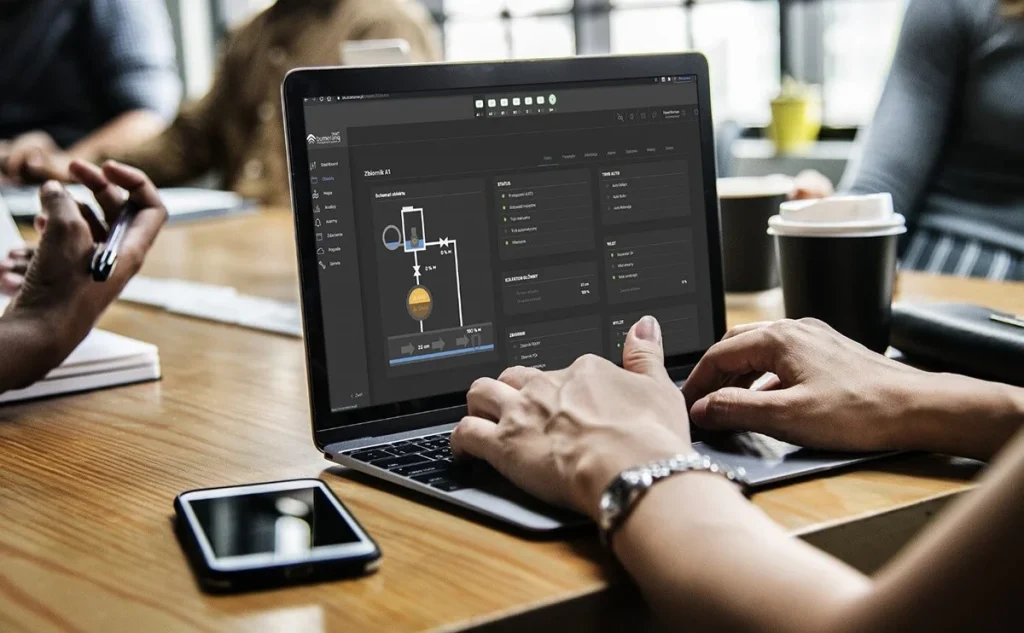
The monitoring system feeds real-time data via radio or wired transmission to a cloud-based monitoring station equipped with, among others, process visualisation software. The data is collected and analysed and, in the event of undesired events, the system generates appropriate alarms and enables automatic execution of controls at remote facilities.

Innovation in the water and wastewater industry – the BUMERANG SMART system

BUMERANG SMART is an intelligent system for the management, control and monitoring of water and sewer networks. It can be an integral part of HYDROZONE storage tanks, but can also work in conjunction with other sewer, stormwater and sanitary network facilities.

The system minimises the need for local inspections of the facilities and allows for accurate scheduling of service dates. It also reduces the response time of technical services in the event of a breakdown, resulting in a high level of environmental safety.

Data from the system is made available to the user from a web browser. In addition, the system collects data from weather services and local rain gauges, allowing for more efficient rainwater management. It also allows the collection of actual measurement data to perform or optimise a hydrodynamic model for the stormwater drainage system.

BUMERANG SMART in Rzeszów – implementation and tangible benefits

Implemented at the end of 2020, the BUMERANG SMART system for the rainwater drainage system in the catchment area of the Budziwój housing estate in Rzeszów allows for the optimisation of the operation of retention tanks and more efficient use of rainwater stored in the tanks. BUMERANG SMART collects real-time data from the weather service and, at the moment of forecasted intensive rainfall, automatically starts the process of collecting rainwater in retention tanks.

When the tanks reach their maximum level, filling is stopped and the gate valve in the main manifold opens. During non-rainy periods, the water stored in the tanks is collected by barrel trucks and used for watering greenery and washing streets.

At the same time, the system constantly monitors the quality of water in the tanks. In the event of any information about irregularities and deterioration of certain parameters, the system triggers the opening of the discharge valve and the water is returned to the main collector.

The integration of BUMERANG SMART with a local weather station makes it possible to initiate the water harvesting process when the measurement from the rain gauge deviates from the forecast. This makes it possible to use the potential of rainwater even more efficiently!

If, during water collection, contamination of the system occurs and the oil layer in the oil separator exceeds a certain level, the system stops operation and the system triggers an alarm about the detected contamination and the interruption of filling. This is at the same time a signal to undertake the necessary maintenance work.

The WATERFOLDER platform – modern tool for selecting a storage tank

WATERFOLDER is the first platform that, thanks to the knowledge and experience of its engineers, allows the optimal selection and quick generation of specification text and drawings for devices of various manufacturers in the water and wastewater sector, as well as the estimation of their operating costs. Most of the tools have been developed with the participation of the manufacturers themselves, so that they are tailored to the realities of the market and respond to the specific needs of the designers.

The platform uses the PANDa rainfall model as a source of information on the intensity of median rainfall in Poland. Its basis is current rainfall data from three decades, recorded using 100 rain gauges that meet the necessary measurement standards.

More information on WATERFOLDER can be found at: www.waterfolder.com

[1] https://digital-strategy.ec.europa.eu/en/policies/europes-digital-decade
[2] https://ec.europa.eu/commission/presscorner/api/files/document/print/pl/ip_21_983/IP_21_983_PL.pdf

According to the Intergovernmental Panel on Climate Change (IPCC), climate change is one of the most serious, if not the most serious, challenge to civilisation that we will face in the 21st century. Therefore, the most important step is to understand the mechanisms of the phenomena taking place and to find and apply solutions that will counteract the catastrophic hydrological effects.

  • Hydrological drought in Poland
  • Hydrological warnings from the Institute of Meteorology and Water Management
  • Heavy rainfall and flooding
  • The solution – retention and green infrastructure
  • HYDROZONE retention tanks

Cities occupy a relatively small area on a national scale or even on the scale of the entire Earth’s surface. However, they generate 75% of global GDP, 70% of greenhouse gases, 70% of waste and absorb 60% of energy production. Thus, they have a key impact on climate change and the resulting unfavourable hydrological situation and decline in plant biodiversity.

Most commonly, we can distinguish between three basic challenges involving water:

  • there is too little of it
  • there is too much of it
  • it is too polluted

While the average water supply per capita in Europe is 4 500 m3, in Poland the figure is only 1 600 m3, and in times of drought as little as 1 000 m3. Why such a colossal difference? The situation is largely blamed on much lower rainfall than in western Europe, but also on rapid run-off and the poor retention of the geological substrate.

It is also the result of years of poor water management decisions. Land reclamation, the draining of wetlands, the concreting of riverbeds, species changes in forests, the decreasing amount of mid-field afforestation and the paving of urban areas have all had a disastrous effect on natural retention.

Warmer winters and a lack of snowfall are also an effect of climate change. Meanwhile, it is the spring snowmelt that improves soil moisture and consequently surface and groundwater levels. According to experts, if we do not take decisive action, in 10 years’ time we will have 40% less usable water than today.

Ongoing several years of hydrological drought in Poland

Drought is a condition that is defined in different ways depending on the climate zone and region. In Poland, the accepted definition is 20 days without rainfall, in which case we speak of atmospheric drought. When plants start to lack water, we are dealing with soil drought, and when the level of surface and underground water decreases, the result is hydrogeological drought. The consequences of the latter can be really serious.

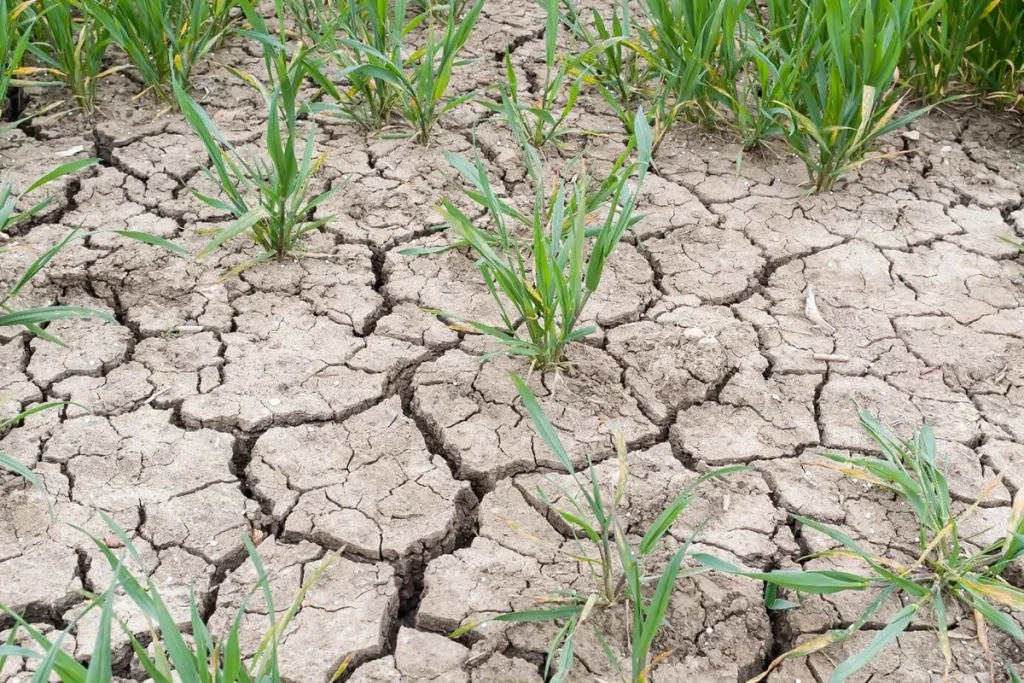
In the meantime, we have been experiencing a permanent drought in Poland for about seven years now, and it covers an increasingly large area of the country every year. The country’s hydrological situation is very difficult, and water deficits are so serious that they result in soil and agricultural drought. This is a huge problem, which will not go unchallenged in terms of the amount and quality of crop yields, and thus the already high prices of food.

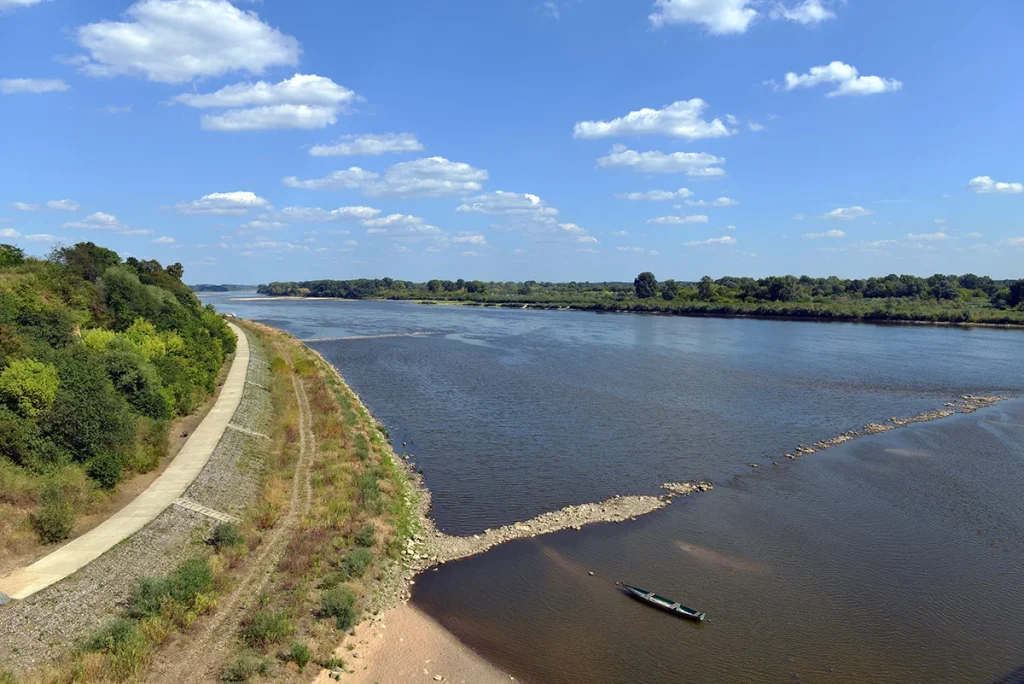
Vistula from Wyszogród bridge at the lowest water level on record

Latest IMGW hydrological drought warnings

Hydrological drought warnings are issued when, for a minimum of 10 days, values at representative water gauge stations are below the multi-annual average of the lowest annual flows (SNQ).

Water levels in rivers in Poland at the end of May 2022 were mostly at low or medium levels. The most serious problem is observed in Wielkopolska in the Warta river basin, where there has been a marked decrease in river water levels, below multi-year averages.

Warnings were also issued for the Małopolskie, Zachodniopomorskie, Lubuskie, Dolnośląskie, Śląskie, Łódzkie and Opolskie Voivodeships. Despite the recent rains, low water flows are still below the SNQ.

In contrast, torrential rains and floods

Another major challenge, especially in urban areas, is the heavy rainfall that follows long periods of drought. This increased rainfall is caused, among others, by increased temperatures in urban areas (heat islands), leading to a heat exchange phenomenon known as convection.

In cities, there are fewer and fewer green spaces and places where water can freely drain into the ground. Often, surface development and road infrastructure is also a problem, with almost the entire volume of precipitation draining into storm drains and surface waters. If the sewer system is not efficient enough or not fully operational, inundations, localised flooding and even floods can occur, which destabilise the functioning of the city and the lives of the inhabitants, but also generate serious economic impacts and financial losses.

Changing mindsets, or let’s start with ourselves

First of all, we need to completely change our attitude to water. We still think that water is something that was, is and always will be. All we have to do is turn on the tap. However, drinking water is an increasingly scarce commodity and needs to be saved. Yet we are still, more or less consciously, wasting huge amounts.

Did you know that during a 3-minute tooth-brushing session with the tap turned on, we waste about 15 litres of water? In an average Polish household, more than 90% of all water is used for household activities such as washing, cleaning, laundry, dishes and flushing the toilet! Drinking and cooking water accounts for only 3%.

Another serious and yet not very controllable problem is the irrigation of fields and the watering of green areas. If certain requirements are met, the construction of groundwater intakes does not require a special water permit. Therefore, farmers, in order to save their crops, create irrigation systems and drill deep wells. The groundwater used for this is irretrievably lost, whereas it should only serve as a source of drinking water. Even when watering our lawns, gardens or flowerbeds, we use drinkable water from the municipal water supply.

The solution – retention and green infrastructure

Retention is the real challenge. In Poland, it stands at 6.5%, while in Spain, for example, it is as high as 40%.

Large-scale implementation of small-scale retention solutions, blue and blue-green infrastructure in agricultural areas and cities is essential. We need specific solutions for delaying runoff, retaining water and reducing evaporation losses. These should be provided by comprehensive government and local government programmes, but also by our own initiatives and actions.

The development of blue-green infrastructure is the future of cities and municipalities in adapting to climate change. Green and blue areas are one of the most important tools for the prevention of flooding, heat waves and also a greater chance for the ever so important plant biodiversity. The construction of green roofs, green walls or the creation of new plantings, combined with water management solutions, increase water retention and the chance to reuse water.

HYDROZONE smart retention tanks

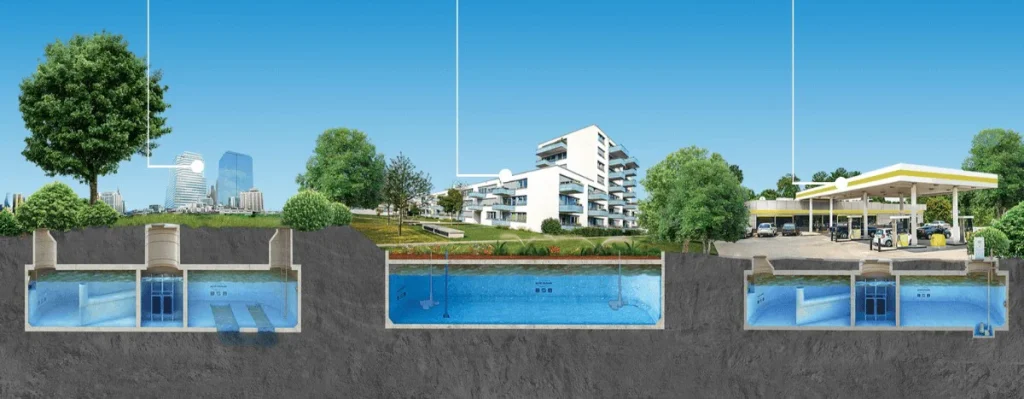
HYDROZONE is an advanced range of modular tanks for the retention of rainwater and snowmelt. By using supplementary components and equipment, it is additionally possible to pretreat and reuse the medium. The configuration options of the equipment elements can be individually adapted to the needs of rainwater treatment and collection.

On one hand, they allow us to avoid the effects of drought and, on the other, they prevent flooding and inundation in situations of heavy rainfall.  An example of this is the implementation of the Hydrozone Benefit tank together with the construction of a storm water drainage system in the town of Międzywodzie.

A HYDROZONE BENEFIT tank with additional functional modules was used, allowing rainwater to be used for watering the green areas. The BUMERANG SMART system, an innovative tool for monitoring the operation of water and wastewater system equipment and facilities, was also implemented.

The solution has eliminated the problem of flooding during the rainy season and facilitated the drainage of rainwater and snowmelt. In addition, during the non-rainy season in the northern part of the city, the water collected in the tank is used to water the green areas.

Pumping of rainwater and sewage involves pumping a specific quantity of the aforementioned raw medium to a specific height and distance in a given unit of time. What distinguishes dry-well pumping stations from traditional pumping systems is the use of the so-called dry pumps, which are placed outside the retention module filled with sewage or rainwater, so that not only they are safer and more hygienic, but also incomparably more comfortable to operate. Simply speaking, during service operations contact of workers with toxic substances, effluents and sludge of various kinds is reduced to a minimum.

Advantages of using a dry-well pumping station

The advantages of using a dry-well pumping station are numerous. Not only is it possible to service only the selected inflow and outflow circuit while the entire unit is in operation, but access to each of the components is greatly facilitated. Thanks to the solid separation system in front of the pumps, that are not directly immersed in wastewater, we reduce the risk of failure and also make it easier to maintain the cleanliness of the unit, which decisively affects the comfort of servicing, as well as the operation itself by eliminating odours. It is precisely thanks to the removal of unpleasant odours that the dry-well pumping stations can be easily located near residential buildings, inside the buildings and in their surroundings.

The ETS PE model by Ecol-Unicon is a good  example of a dry-well pumping station. ETS PE is equipped with two single-channel solids separators, which are located directly at the discharge connections of the pumps operating alternately, in the external part of the retention module. This solution allows for efficient servicing of the unit and all its modules. This model significantly stands out in the market through the innovative construction of the HDPE chamber. The retention module is integrated into the chamber, thus providing a compact unit. In addition, the pump, as well as additional installations, such as a ladder, an operating platform or a flushing installation, are selected on the basis of project specifications and individual user requirements, which facilitates a comprehensive adjustment of the unit to the needs of the user.

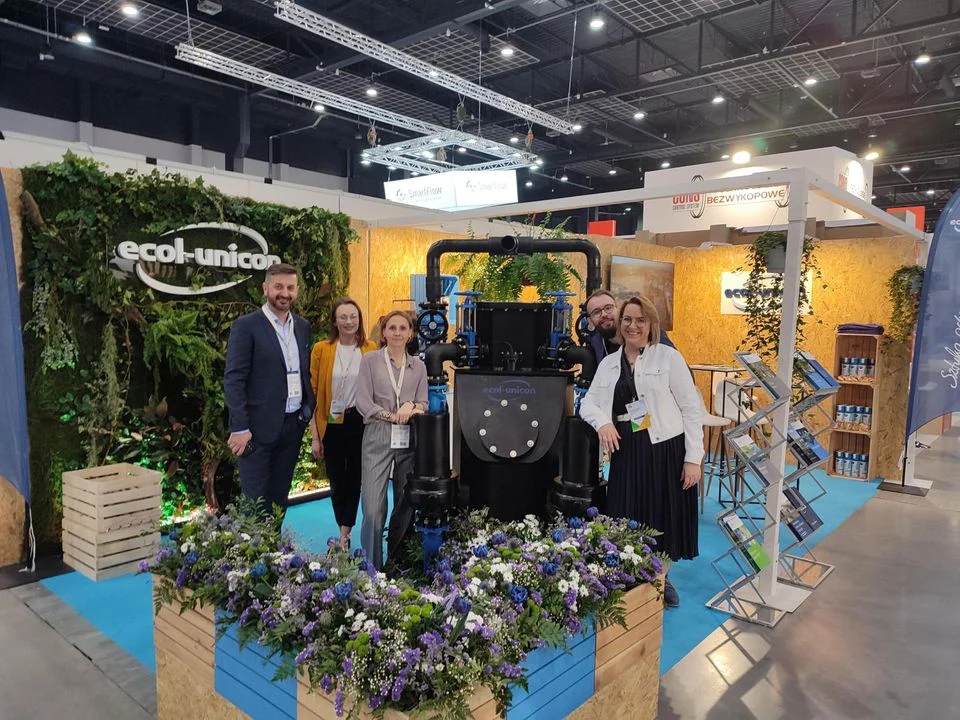
Presentation of the dry-well pumping station ETS PE 80 at the Wod-Kan trade fair in Bydgoszcz

Fading popularity of traditional pumping stations

At first glance, traditional pumping stations seem to be a more popular solution than the above-mentioned dry-well pumping stations. All because of their universality, as well as simplicity of construction, which is usually limited to a tank and submersible pump, resulting in relatively low investment cost. And, although at the design stage we often care about reducing costs, it is worth considering whether the subsequent servicing of such a device will not generate additional budget costs.

Engineers highlight cumbersome operation as the biggest drawback of traditional pumping stations. As previously mentioned, traditional pumping stations, the so-called wet ones, assume the foundation of the pumping system directly in sewage or rainwater. It is because of this fact that maintenance of this type of technology is connected with close contact of sewage workers with wastewater.

It is also worth mentioning that due to the direct contact of waste with the pumping system, such a system is considered to be more prone to failure and has a shortened service life. Traditional pumping stations do not have systems to separate solids from wastewater, so they are easier to fail. Of course, there are solutions in the form of installing screens to retain sand or stones, but these only represent additional costs.

Is this the end of traditional pumping stations?

The growing installation market forces contractors, but also investors, to adapt to its pace, so it is not surprising that dry-well pumping stations are an increasingly popular solution. Their numerous advantages compensate for the disadvantages of pumping stations, which are considered to be the most troublesome. At the moment, it is the dry-well pumping stations that guarantee better comfort of use, lower energy consumption and trouble-free service, but it is not said that traditional pumping stations are a technology to be abandoned. It is worth remembering that the choice between these variants depends on many factors, starting with the location or the amount of sewage we need to pump, and ending with the available budget, including both the installation of the system itself and its subsequent operation. However, it is hard to resist the conclusion that it is the dry-well pumping stations that will surpass wet-well pumping stations in the popularity contest, and for good reason.